




Running Is the Mind Your Business Sport:
How Byrde Waugh Is Reclaiming Her Body and
Changing the Face of Distance Running
Over the years, I have had a lot of conversations with everyday athletes. The have all impacted me in a way that what you see today is not the same person who started this company 6 years ago. I am forever grateful for that. I am also grateful for the conversation I had with Byrde Waugh, who goes by B. Byrde is a disabled Black woman runner who connected with me on Threads and was kind enough to share her story with me. This chat will not be forgotten any time soon.
A Disabled Black Woman Runner Not Limited By MS
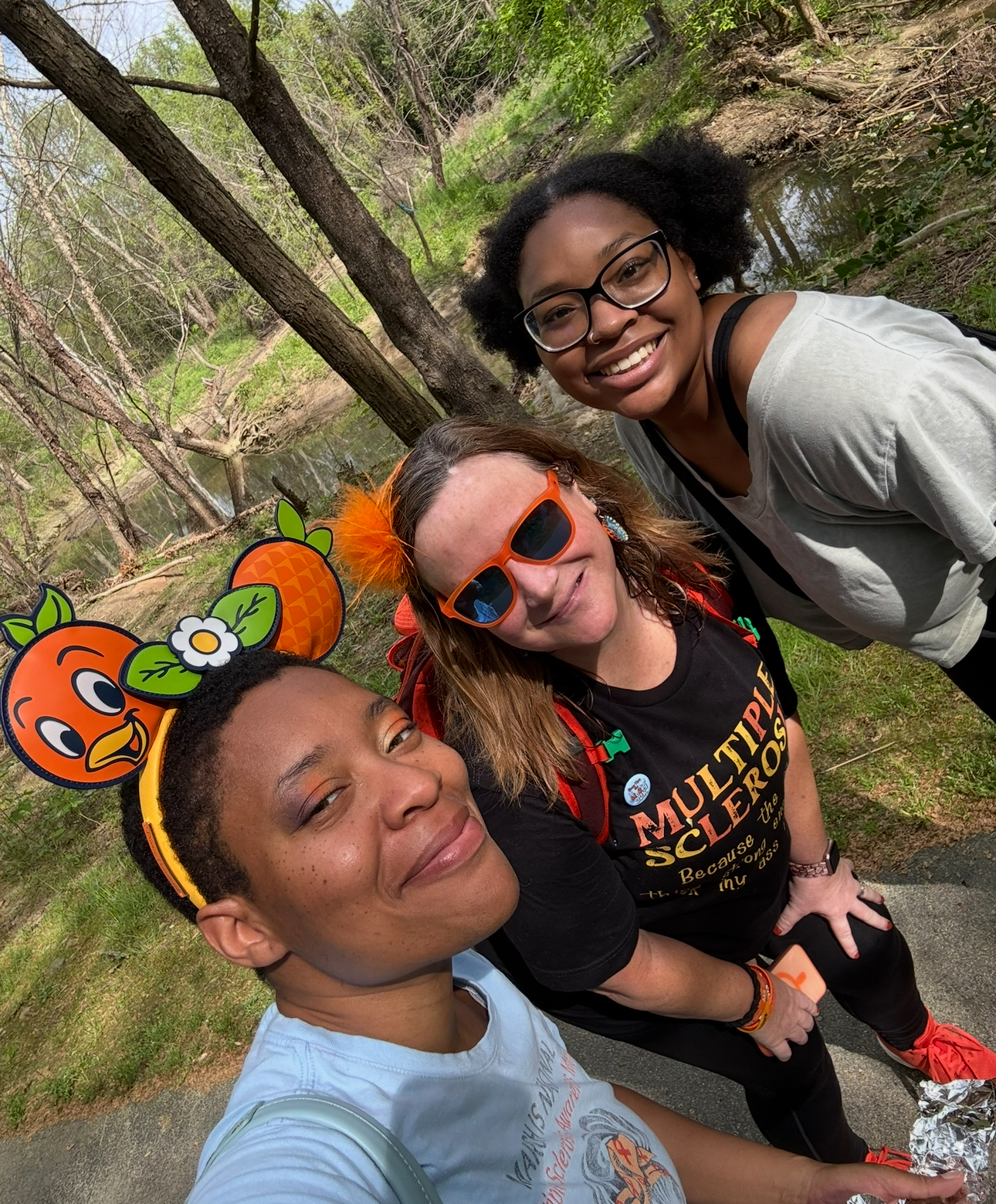
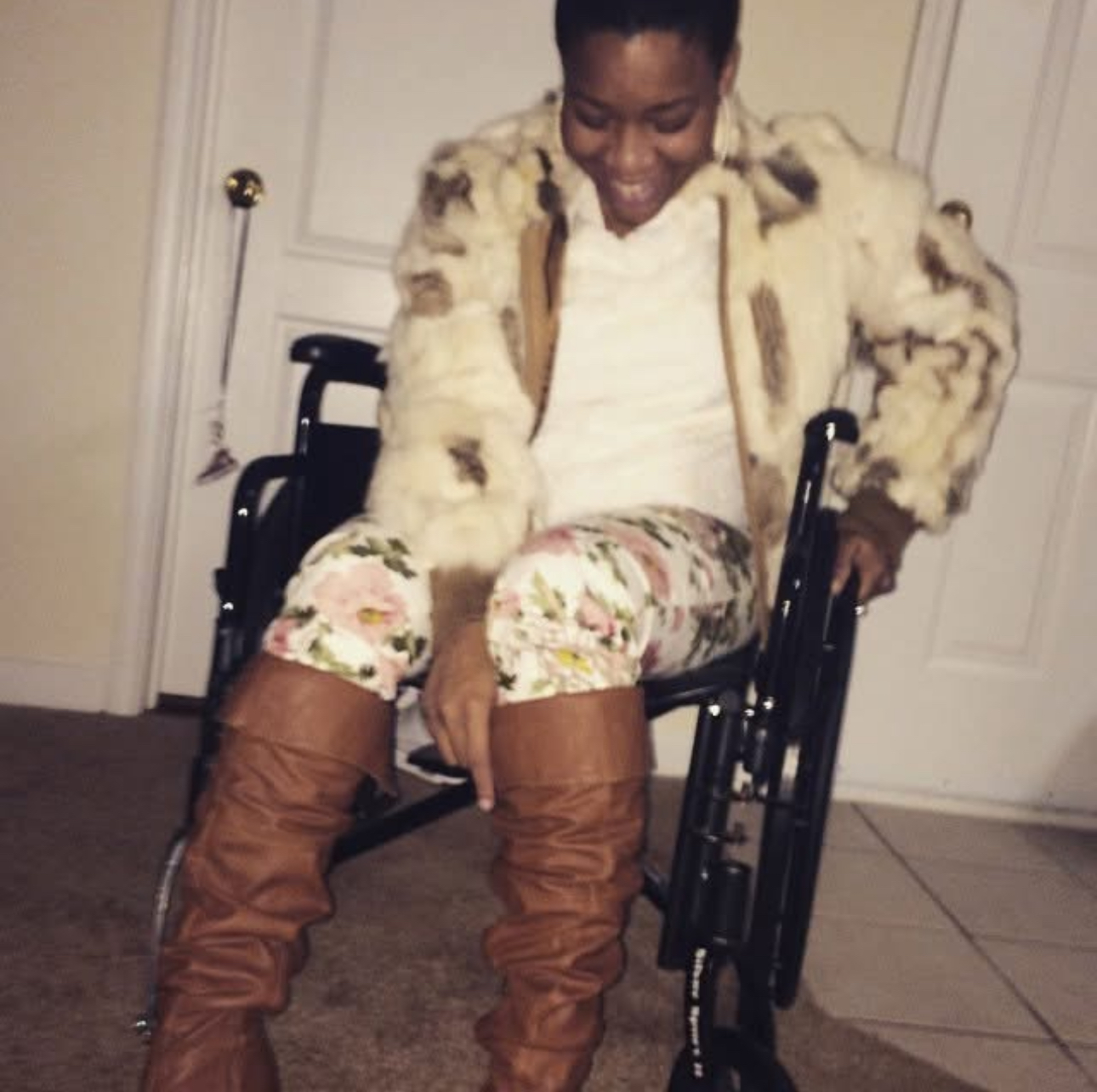
B has multiple sclerosis, an autoimmune disease that attacks the nervous system. About eleven years ago, it put her in a wheelchair for close to a year. In that wheelchair, she made herself a promise: if she ever walked again, she would run. Not might run. Would run.
That promise became a mile on a dark, rainy night in Chapel Hill which was her first test after regaining her mobility. She ran it under ten minutes despite not having trained. She tucked that mile away like a jewel on a shelf and kept moving forward.
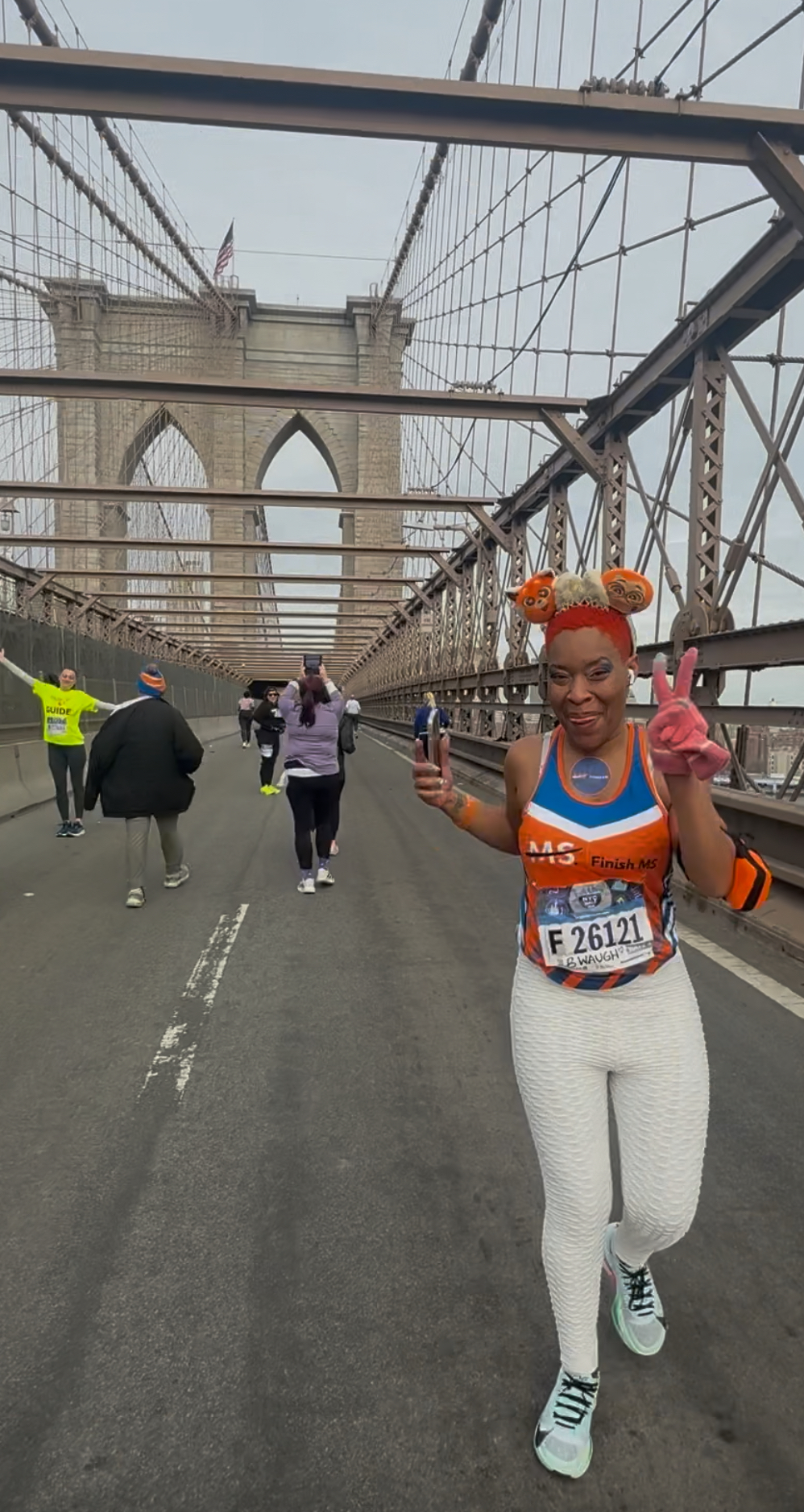
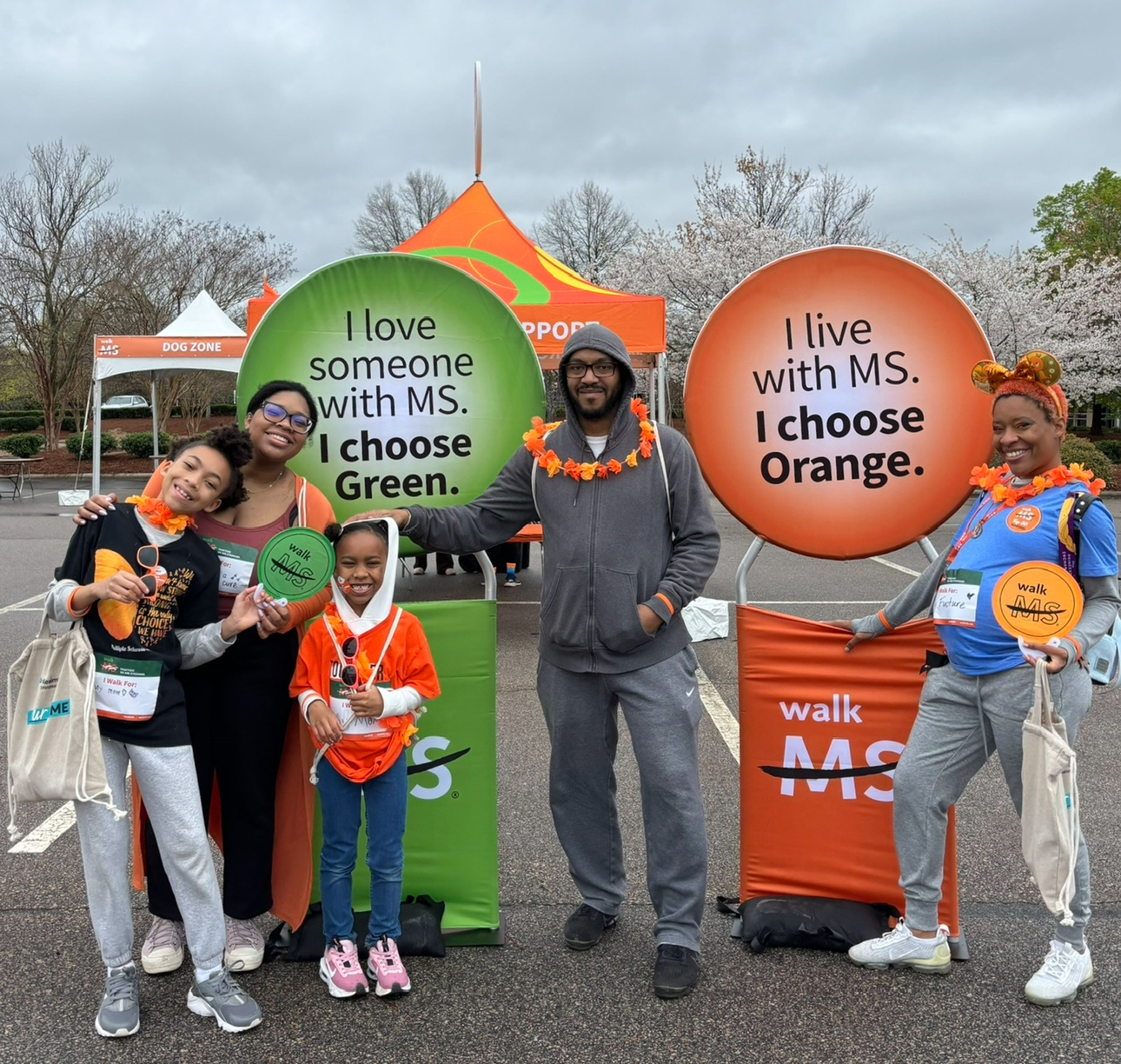
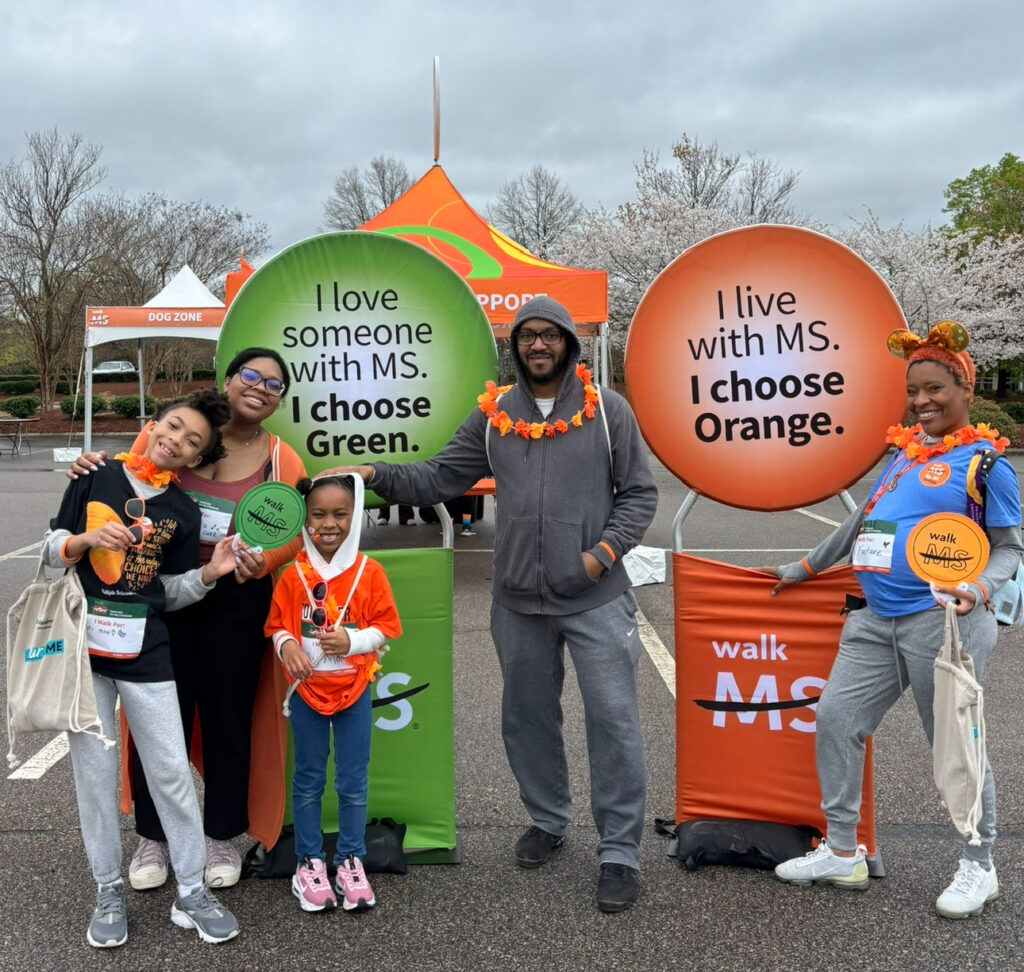
The real turning point came when she met a volunteer at an MS Walk who biked 22.2 miles every year despite having the same disease. Seeing someone with MS choose movement changed everything. B signed up with Finish MS, wrote an essay about her passion for running, and earned a spot in the Disney Princess Weekend 10K. One detail she left out of the essay was that she was pregnant. B ran it anyway, crossed the finish line with the balloon ladies on her heels, and never looked back.
She Doesn’t Run Despite the Pain. She Runs Because of It.
This is the part of B’s story that made me jot down notes. This is also the part of her story that gives me perspective. Her baseline pain level on any given day is a four out of ten. That is her floor, always. So she made a decision.
“I refuse to crawl to the bathroom just because of my disease,” she told me. “I’d rather crawl to the bathroom because I ran 13 miles.”
She chooses her pain. She chooses the kind that comes with accomplishment attached. This is the pain that is the kind that no disease can take credit for.
ADVERTISEMENT

Visibility Matters
At the New York City Half Marathon, surrounded by roughly 30,000 runners, B counted maybe two Black women. Two. She also grew up being funneled into sprinting as a young Black athlete, even when coaches could see she was built for distance. Nobody asked what she wanted. What she wanted was miles.
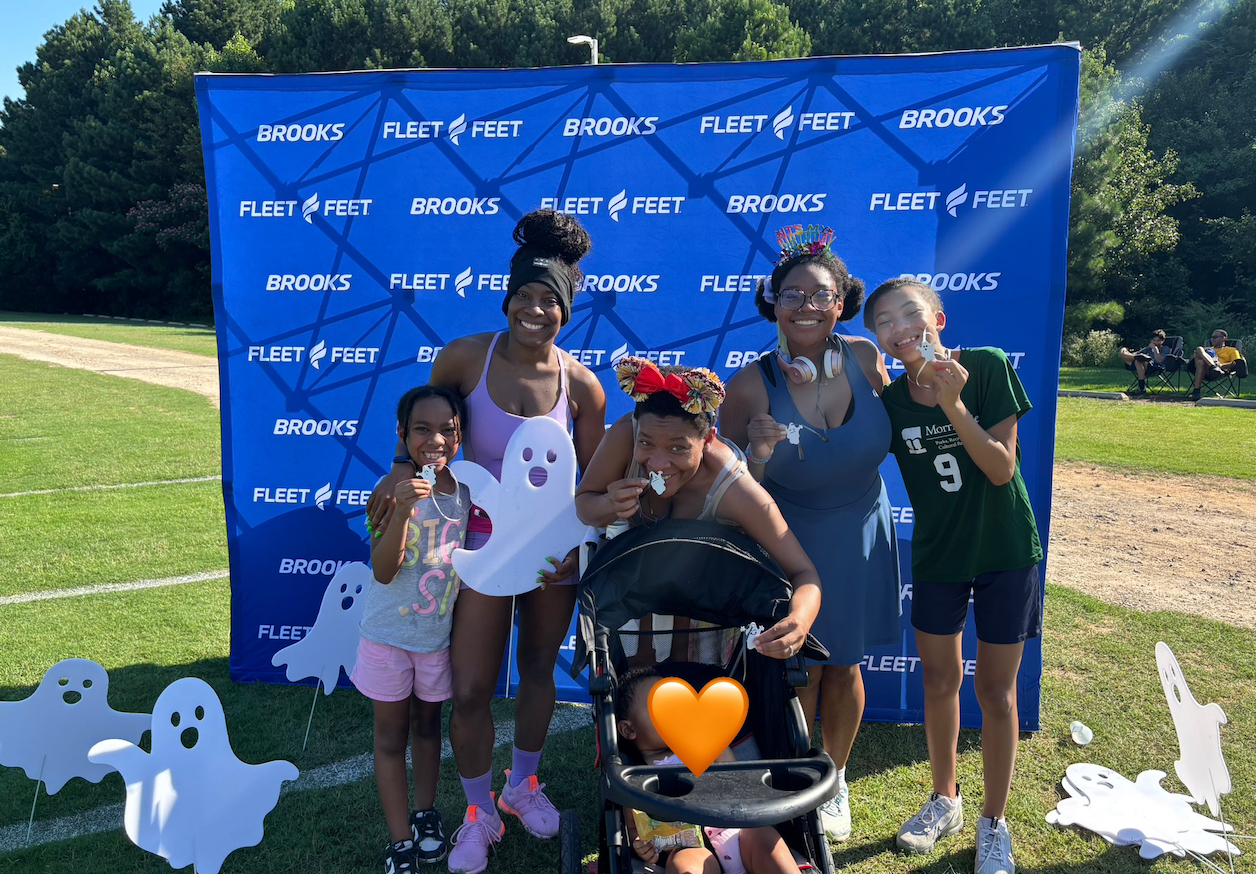
So now she runs through her neighborhood. She shows up at local parks and is visible on purpose. She does what she does for young Black girls who don’t see themselves in distance running, for people with MS who think movement is no longer theirs, for anyone who has ever been made to feel like this sport wasn’t built for them.
“I’m passionate about being out there so that I can be a representation of everybody,” she said.
Running Is the Mind Your Business Sport
B put words to something I’ve felt for years. Running is a mind your business sport. You manage your own effort, your own pace, your own body. The people at the top of the sport aren’t policing anyone else. They’re focused on themselves. This is why the idea of gatekeeping is so bothersome to me. We should all want to see more everyday athletes like B out on the course. Running next to each other, sharing stories and laughs. Commiserating over how hard that last hill was.
If a disabled Black woman runner can talk to a middle-aged Puerto Rican runner and share stories as well as tips…..aren’t we all better off for that?B is building toward a hundred-miler and an Ironman. She is 41, she has MS, and she is just getting started. The starting line belongs to her. It belongs to all of us.