



Build Confidence, Become a Better Swimmer
Why Everyday Athletes Become Better Swimmers
by Focusing on Confidence building skills
Walk onto the pool deck before any masters swim practice, and you’ll see a mix of athletes. Some move effortlessly through the water, while others hesitate before pushing off the wall. Every one of them has a story and WHY for being there.
I learned to swim when I was four years old and am very confident in swimming in all bodies of water. That doesn’t mean swimming always came easily. Like many kids, I had moments of fear, frustration, and self-doubt, especially in high school. I am grateful I spent my youth learning, new skills and comfort and have a NO FEAR mindset now as an adult.
Swimming was so much fun, so many friendships made, it never felt like a “workout” and never felt like I “had to” train. It was something that was part of my daily lifestyle. I got to swim at a D1 college, get a full ride scholarship and then competed at the highest levels of triathlon, becoming the Overall amateur Kona female champion in 2008. And now, I get to coach both youth and adults beginning their own journeys.
Why Swimming Feels Different for Adult Athletes
It is not a secret that the majority of triathletes learn to swim as adults and are not big fans of swimming. Its a not a social sport during the workout, just after, It can be boring and absolutely difficult to learn compared to a child.
Many triathletes discover multisport as an injured runner or burned out cyclist, pursuing a challenge, changing their lifestyle. They signed up for a sprint and even at ironman triathlon on a whim, borrowed a wetsuit, and suddenly found themselves staring across a lake on race morning questioning their life choices.
Practice Skills That Transfer to Open Water
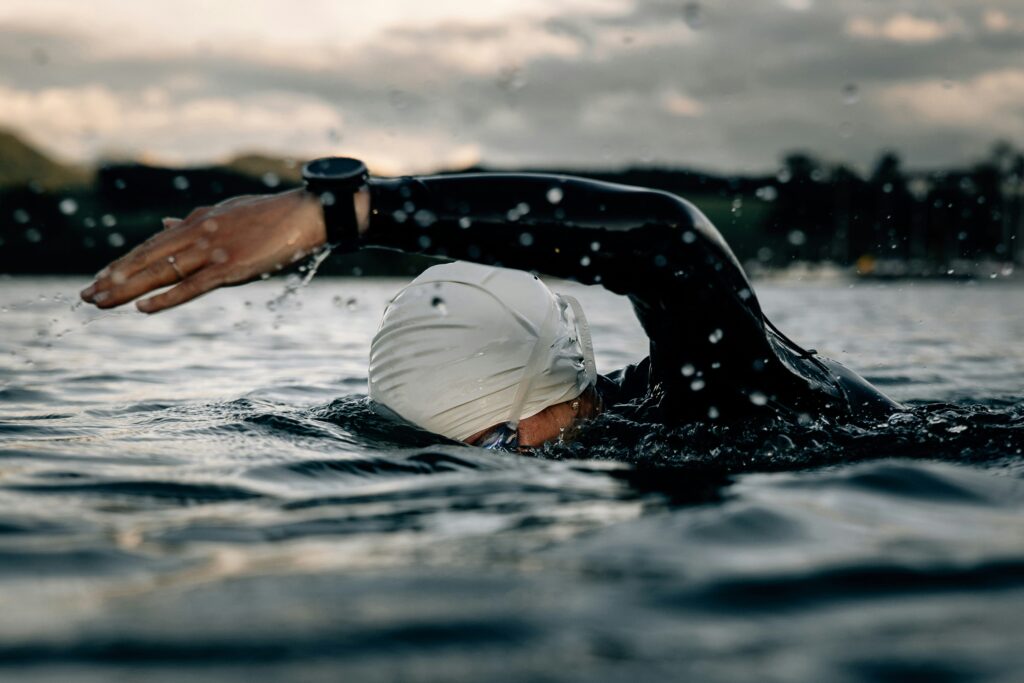
I’ve coached athletes who struggle with swimming despite running marathons and riding centuries and became anxious the moment they stepped into open water because they never developed the skills in the pool that could help them in open water. Floating, treading water, sighting, swimming in close proximity to other swimmers, swimming with eyes closed and most importantly they did not practice open water swimming before their event.
Why Swimming Feels Different for Adult Athletes
Better Technique Makes Swimming Easier
Confidence comes from practice.
When your body position improves, the water feels different. When you learn to breathe without panic, your heart rate settles. When you understand how to reduce drag, swimming becomes easier and more enjoyable. As that happens, you begin looking forward to practice instead of dreading it.
You stop worrying about whether you’ll finish the swim and start thinking about how you can improve in the next event
Consistency Builds Swim Confidence
Consistency builds Confidence. Every time you show up and execute, when you practice sighting in the pool, when you swim without your wetsuit because you reduced body drag
More Frequent Swimming Builds Better Habits
When athletes enjoy swimming more, they stop skipping workouts. Instead of cramming one long swim into the week, they begin swimming more frequently. Those shorter, consistent sessions reinforce good habits and allow technique to improve naturally.
The goal is progress.
You stand on the beach feeling prepared because you’ve practiced for this moment. You’ve swum in crowded lanes. You are no longer breathless. You’ve learned to sight without losing rhythm. You’ve practiced swimming without a wetsuit so the warm water temperature feels amazing, not anxiety driven, won’t surprise you.
Turn the Swim Into Your Warm-Up
Every Swimmer Has a Beginning
The swim becomes the warm up for the bike instead of an obstacle in your way.
As a coach, one of my favorite transformations to witness to watching an athlete go from fearing the water to looking forward to the swim is far more rewarding than seeing a faster split on the results sheet.
Because confidence changes how athletes approach every challenge in training and in life.
Every swimmer has a beginning. Eventually, the swimmer who once wondered if they belonged becomes the athlete encouraging someone else to begin.
Wendy Mader has been immersed in endurance sport since her Division I swimming days at Eastern Michigan University and has raced triathlon since 1992. She prefers the training over the spotlight of race day. With a master’s degree in Wellness Management, where her research examined eating disorders among triathletes, she brings both lived experience and academic insight to the conversation around performance and health. Hee decades of experience navigating setbacks, she coaches athletes to chase growth, she believes longevity, not metrics, is the real measure of success. As founder of t2coaching, she guides ambitious athletes to execute, think long-term, and stay in the sport for life.
