

One of my favorite parts of hosting Fireside Chat is discovering just how much I still have to learn.
I’ve been around endurance sports for nearly two decades. I’ve finished Ironman races, ultramarathons, marathons, and more conversations with athletes than I can count. Yet every once in a while, someone sits across from me and completely changes the way I look at our sport.
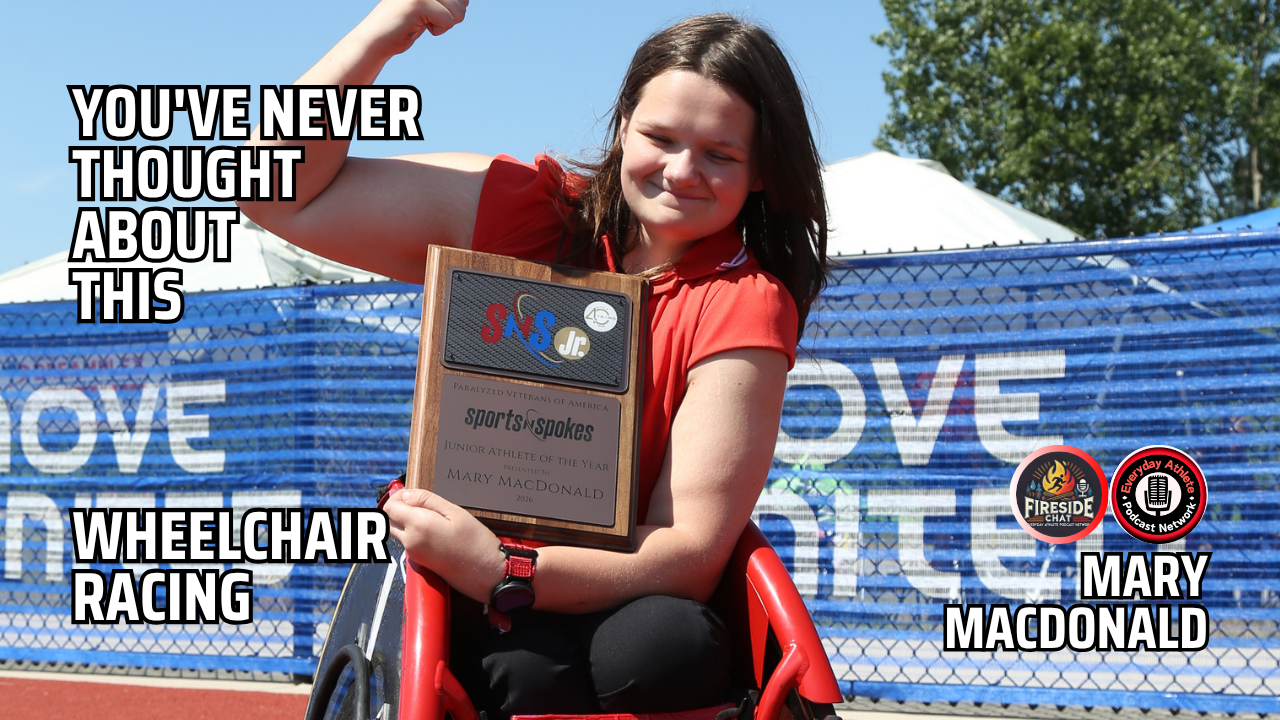
Mary MacDonald did exactly that.
At just 17 years old, Mary is already chasing a Paralympic dream. She’s the 2026 Sports ‘N Spokes Junior Athlete of the Year, the Massachusetts Ms. Amazing winner, and one of the brightest young voices in adaptive sports.
Those accomplishments are impressive. Her perspective is even more impressive.
When Sport Becomes Hope
Mary didn’t find racing because she wanted medals. She found it because she needed hope.
Like many people during 2020, she struggled with depression. Bullying and anxiety made everyday life difficult, and simply getting out of bed became a challenge. Her parents encouraged her to try sports, and what started as an effort to become healthier slowly became something much bigger.
Sport gave her purpose. It gave her community. Eventually, it gave her a dream of representing Team USA as a Paralympian.
That part of the conversation reminded me why endurance sports matter so much. We often think we’re chasing finish lines. More often than not, we’re chasing a better version of ourselves.
From Depression To Purpose
One thing I appreciated about Mary is that she never asked for sympathy.
She simply shared her story. She talked about meeting other adaptive athletes, discovering that her dream was actually possible, and realizing she belonged in a community that expected greatness instead of limitations.
It was a great lesson for me to hear. Sometimes confidence isn’t something we build alone. Sometimes someone else believes in us first.
ADVERTISEMENT
.png)
More Than A Racing Chair
Before talking with Mary, I knew wheelchair racing existed.
I didn’t understand it. I didn’t know a racing chair could cost more than $20,000.
I knew that airlines regularly damage racing equipment but I never considered how difficult it can be to find accessible restrooms before a race or why athletes must educate race directors about adaptive divisions.
I certainly hadn’t thought about runners accidentally stepping into the path of a wheelchair athlete after hearing, “On your left.”
Those aren’t small details. They’re daily realities.
Mary patiently explained each one, not to complain, but to educate.
That’s what made this conversation special.
What Most Runners Never See
The more we talked, the more obvious it became that accessibility isn’t just about adding another race category. It’s about creating an environment where every athlete has the opportunity to compete safely.
That means better communication. Safer courses. Accessible facilities. Thoughtful race registration. And perhaps most importantly, listening before making assumptions.
Those changes don’t only help adaptive athletes. They make races better for everyone.
Racing Together Means Learning Together
One thing Mary said continues to stick with me.
If a race doesn’t have a para division, she doesn’t see it as a reason not to race. She sees it as an opportunity to help create one.
That’s leadership. At 17 years old, she isn’t waiting for someone else to improve the sport. She’s already doing it.
Representation Creates Change
We say it often at The Everyday Athlete because we believe it.
Representation matters.
The more stories we tell, the more athletes feel welcome.
The more visible adaptive athletes become, the more race directors, volunteers, spectators, and fellow runners learn what inclusion actually looks like.
That benefits every starting line.
The Finish Line Isn’t The Goal
Mary dreams about becoming a Paralympian.
I hope she gets there. But after spending an hour talking with her, I realized something.
Her biggest impact may not come from crossing a finish line. It may come from changing the way the rest of us think before we ever hear the starting horn.
Because endurance sports are at their best when everyone has the opportunity to discover what they’re capable of—and when every athlete is seen first as an athlete.
Listen On Apple Podcasts
Listen On Spotify
ADVERTISEMENT
