



Still Chasing the Black Line
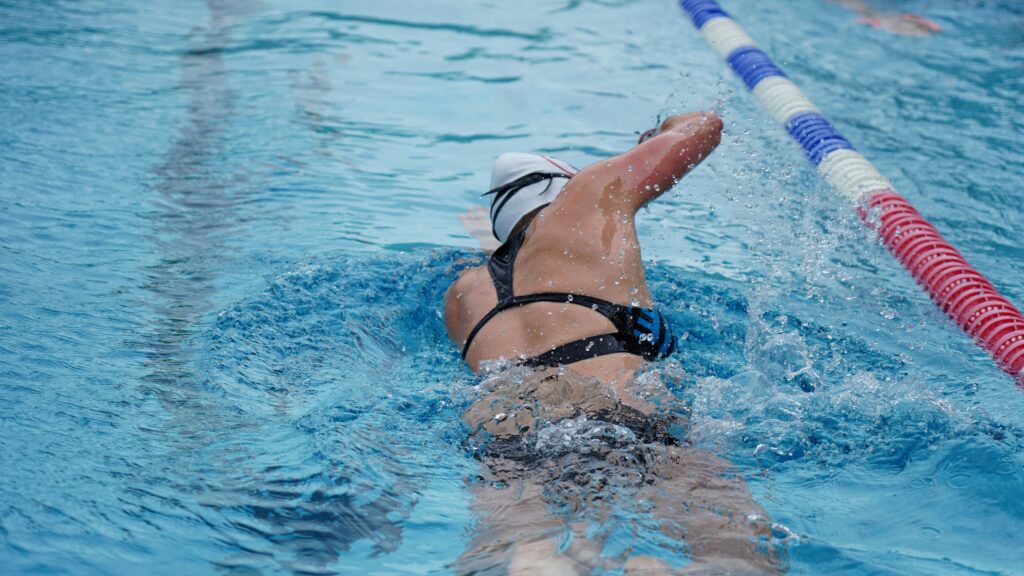
A month after walking across the stage with her exercise science degree, 22-year-old Kayla M. is still chasing the black line. She grew up in a small desert town, found her lane on a high school team that practiced before sunrise, and earned a spot at a mid-major college program as a middle-distance freestyler.
Sophomore year of college, she came out to herself, then to her teammates, then to the rest of her world. Today she works an entry-level job at a physical therapy clinic, swims with a masters club three evenings a week, and spends weekends in open water.
Where did swimming start for you, and what made it stick?
I took lessons because my mom wanted me safe in the water. I started maybe around age six. We lived in the desert, so it wasn’t as if we had a lot of open water, but she wanted me to be safe in pools or if we went to the beach. Little did she know, I would fall in love with swimming and she would be dragging me to practices and meets throughout my childhood.
By middle school I was addicted to the routine. Really, I liked my friends. Swimming was a social hour that we all worked out. By high school, it was my community and something I was good at. In high school, I didn’t win a lot of races, but enough to keep me motivated and push toward bigger meets and eventually college.
In college, it gave me structure. I liked the separation from schoolwork and the rhythm of practice. I think most collegiate swimmers can relate but it gave me friends that I know I will have for years to come.
When did you come out, and what did that look like on your team?
Second semester of sophomore year. First, I told one roommate. We cried, then laughed at how dramatic we were. I told my lane mates next because those were the people. The reaction was mostly supportive…lots of hugs and a few awkward high fives. The team captains and coaches made it clear that respect was not optional. I am lucky that was just a few years ago. I think if I had grown up 15-20 years ago, my experience would have been different so I appreciate those who did grow up in that era paving the way for me.
What helped you feel safe and included on the team?
When captains shut down hateful jokes, it changed the water we were swimming in. Small things mattered too. Our coaching staff asked for feedback every semester and actually acted on it. That made me feel like part of the program, not an exception to manage.
How did being out change your swimming, if at all?
I stopped burning energy hiding. That freed up room to focus on other things. I didn’t suddenly drop ten seconds, but I could focus longer on swimming. My mind didn’t wander as much. Before, I was always wondering would this person really accept me.
What was the hardest part about graduating and leaving college swimming?
You don’t realize how loud a college swim team is until you train alone. No bus rides, no team pasta, no trainer taping your shoulder at 6 a.m. I grieved that community.
Finding a masters club saved me. I’m the youngest in my lane by a decade. They talk about kids’ homework and mortgage rates between intervals. They include me, but sometimes it’s tough to relate but it also gives me motivation that I could be doing this into my 50s, 60s, and even beyond.
What does training look like now that you work full time?
Three to five pool sessions and a long open-water swim on the weekend, plus one short lift. In the pool, I rotate my focus: one threshold day with broken two hundreds and tight rest, one speed day with short sprints and long recovery, and one aerobic mix with pulling and paddles.
My goal is not to replicate college volume, just to do what works for me now. In college, I swam 6000–7000 yards a practice, ten practices a week. There’s no way I can do that and balance work. My soft goal is around 20,000 yards a week, which happens about half the time.
Why open water, and what do you get from it that the pool doesn’t give?
It’s meditative and a little wild. You may be the fastest swimmer in the water, but taking the wrong current means you’re the slowest. Every swim is different, and that perspective is healthy after years when the scoreboard felt like your whole identity.
Any performance goals that excite you this year?
I want to break twenty minutes in a one-mile ocean swim. It depends on the current, but it’s a fun goal. In the pool, I’m aiming for a personal best in the 200 free at a masters meet.
What advice would you give a younger swimmer who is questioning their identity?
You don’t owe anyone your story. Find one safe person, maybe outside the team if that feels better, and start there. If someone uses your honesty to make you smaller, that’s about them. Don’t hide yourself because someone thinks you should.
What do you wish coaches knew about supporting LGBTQ athletes?
Be clear on standards, redirect when language misses the mark, and don’t wait for the one queer athlete to bring it up. Ask how an athlete wants to be supported rather than assuming. My best coaches are ones that have immediately shut down bad behavior.
What keeps you in the water now that you’re not scoring points for a school?
I like who I am after practice. I’m more patient at work, kinder with myself, and less likely to spiral. Swimming isn’t just about races anymore. It’s about doing the thing I love because I want to. I think everyone needs a hobby that they enjoy and aren’t forced to do.
Conclusion
Kayla’s story shows what it looks like to carry a sport into new seasons of life. She doesn’t have a team bus or a championship schedule anymore, but she still has a lane and a reason to get in. The water is where she measures her own progress now. What keeps her swimming isn’t obligation or expectation, but the simple fact that it still matters to her.
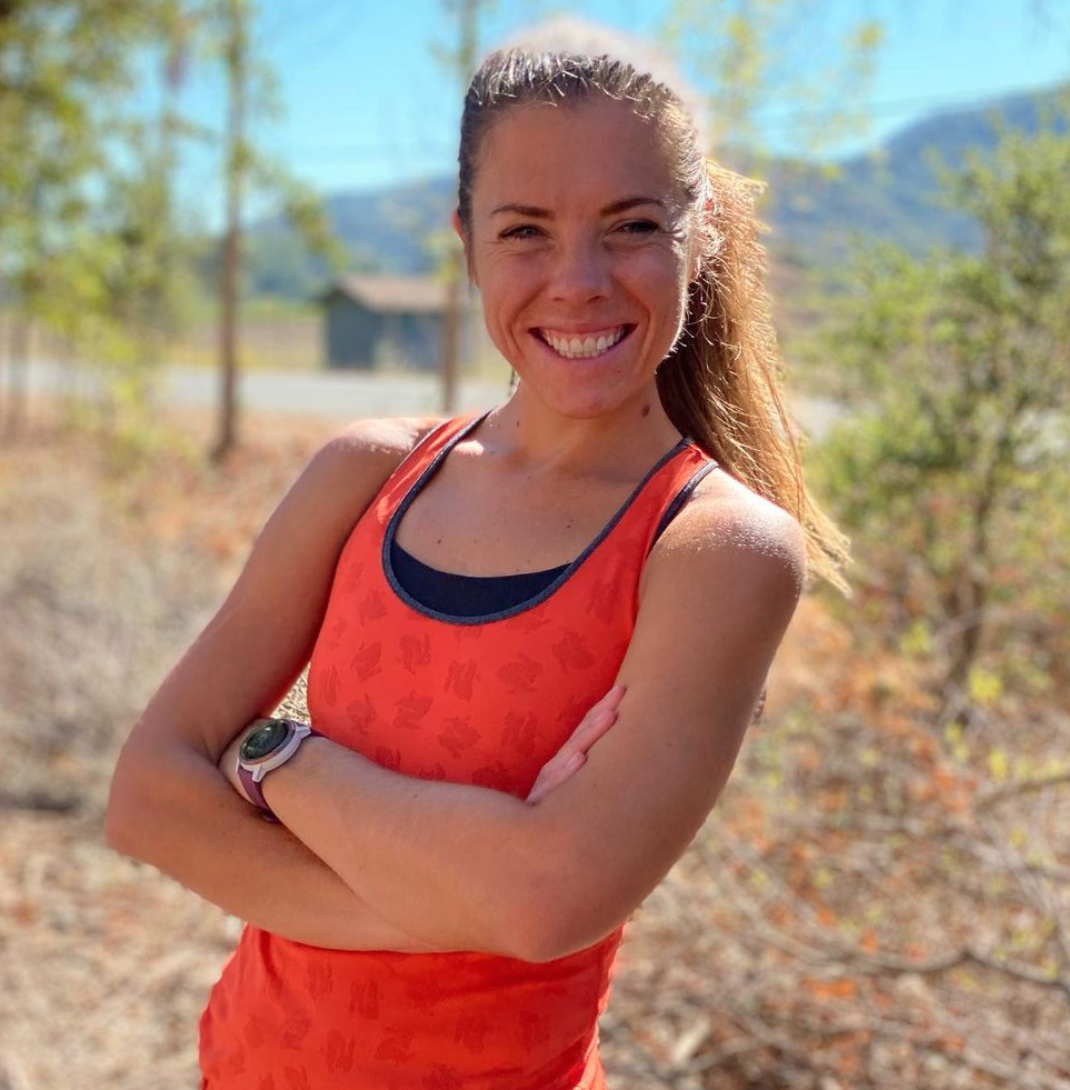
Hollie is a runner, hiker, swimmer, residing in California. She has worked in run specialty for nearly 8 years and has fit hundreds of people for shoes. Outside of the running world, she enjoys the general aviation world, her two cats, and spending time with her spouse.
