


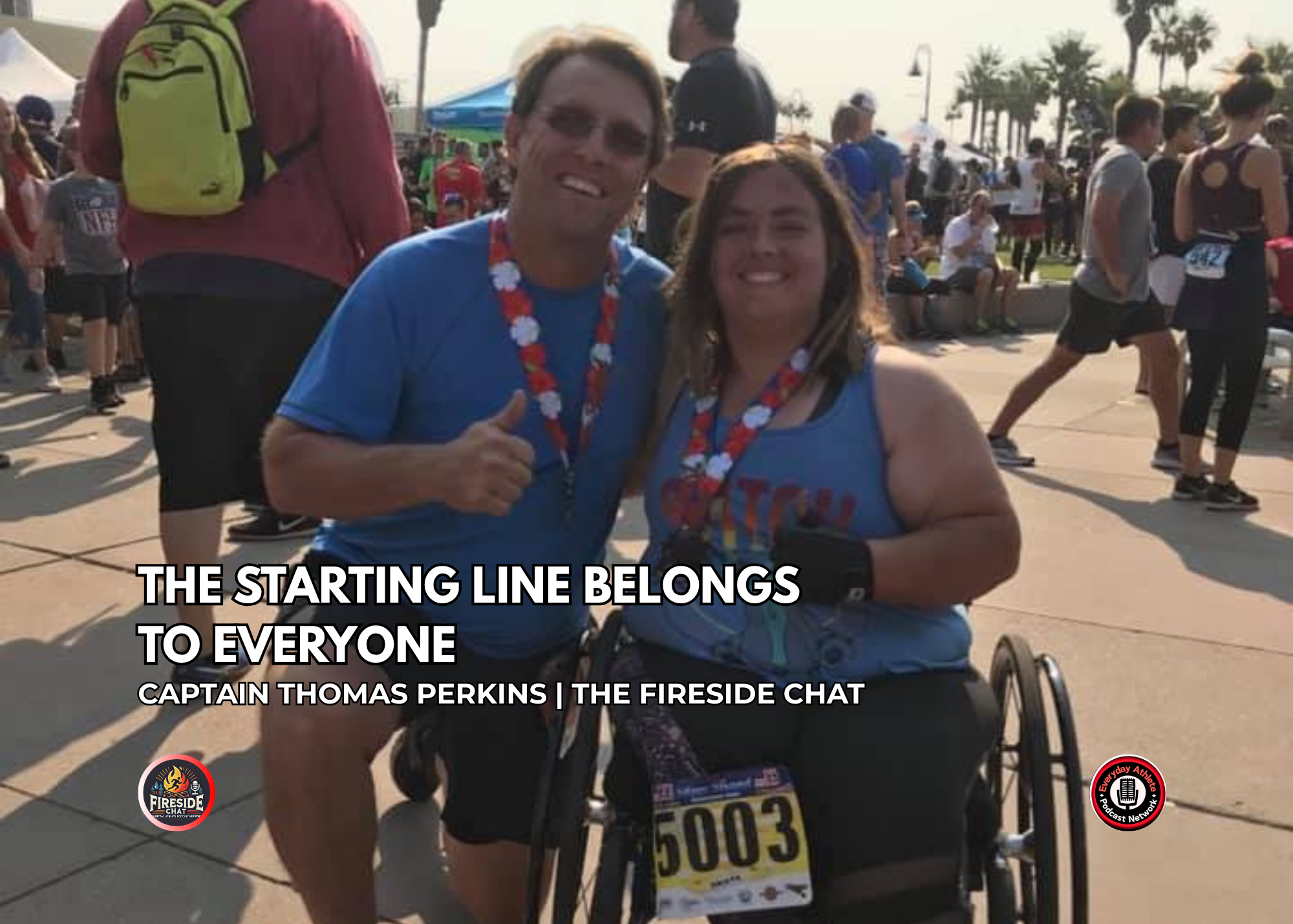
What would you do if your nine-year-old told you they wanted to complete a half marathon?
I’d probably ask whether they understood how far 13.1 miles actually is.
Captain Thomas Perkins had a different experience. His daughter Breezy, who was born with spina bifida, had spent years watching him race. Eventually, she decided she wanted to participate.
And her first race wasn’t a 5K. It was a half marathon.
She Wanted to Be Part of It
Breezy wasn’t interested in becoming an elite athlete. She wasn’t chasing podium finishes or personal records. She wanted to experience something she’d watched her father enjoy for years.
Thomas remembers being nervous about her first race. Would she be able to navigate the course? Would she get stuck on a hill? Should he stay alongside her?
Instead, he raced, finished, and waited.
When Breezy approached the finish line, Thomas gathered family members and strangers to cheer her home.
It was a moment neither would forget.
ADVERTISEMENT

Participation Is an Accomplishment
During our conversation on The Fireside Chat, Thomas explained that Breezy enjoyed racing because it reminded her she was strong enough and had the perseverance to finish.
She returned to the event in subsequent years. Not because she needed to prove something to the world, but because she enjoyed participating.
Inclusion Requires More Than an Invitation
We also discussed the practical barriers facing adaptive athletes.
Specialized racing equipment is expensive. Race registration systems don’t always make adaptive categories obvious. Start-line areas and corrals can be difficult to navigate with handcycles and racing wheelchairs.
Thomas pointed out something race directors might overlook: athletes using these devices need sufficient space to prepare before the start.
Belonging Is Something We Create
This conversation reinforced something I’ve believed for years.
There’s a spot at the starting line for every body and everybody.
But putting that statement on a website isn’t enough. We need to listen to athletes, understand what participation requires, and make the necessary accommodations.
Thomas’s story isn’t about a father making his daughter into an athlete.
It’s about a daughter deciding she wanted to race and a family helping her pursue that opportunity.
Listen to my conversation with Captain Thomas Perkins on The Fireside Chat, and then tell me: What could race organizers do to make their events more welcoming?
Listen On Apple Podcasts
Listen On Spotify
Listen to The Fireside Chat
Captain Thomas Perkins
What happens when a daughter decides she wants to experience the same finish line her father has crossed for years?
Join Jason Bahamundi and Thomas Perkins for a conversation about fatherhood, adaptive sports, belonging, and the courage to participate.
Listen on Substack →