


Getting Started in the Most Unlikely Year
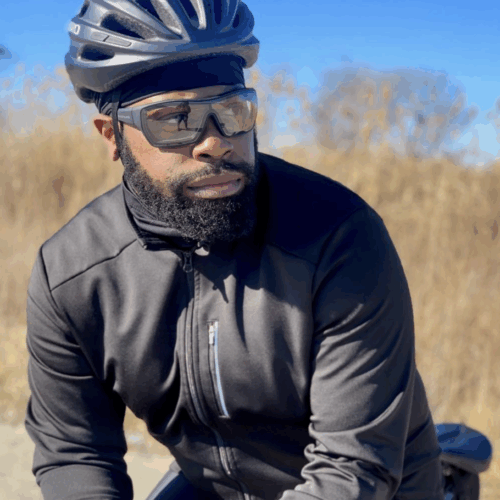
For many athletes, 2020 was the year when races were canceled, gyms shut down, and routines fell apart. For Brandon Manning, it was the year his endurance journey began.
“Some people like to say they made COVID work for them. For me, it was about finding a way to move,” Brandon said. While running didn’t feel like a natural fit—he openly admits, “Running is not my forte”—cycling quickly became his outlet. He picked up a bike from Bicycle Habitat in Brooklyn and started pedaling through the neighborhoods and roads of upstate New York, using two wheels as a way to carve out freedom during a time of isolation.
It wasn’t just about movement, though. For Brandon, safety was also a concern. After the killing of Ahmaud Arbery, a Black man who was killed while running, and the disappearance of Dominic Davy. Mr Davy was a Black adjunct professor and Ph.D student at Binghamton University who went missing while on a run in Brandon’s local area in upstate New York. The idea of running alone in rural spaces came with layers of fear. “I’m going to keep myself inside,” Brandon recalled with frank humor. Cycling, he figured, gave him more control, more speed, and maybe a little more safety.
That decision became the catalyst for century rides, community connections, and eventually, a path into triathlon.
Finding Freedom on Two Wheels
Brandon’s cycling quickly escalated from casual rides to full-blown endurance challenges. Within a year, he had completed between three and five century rides. “If you had told me that I’d bike a hundred miles, multiple times, I wouldn’t have believed you,” he said.
One ride in particular stands out in his memory: the Harriet Tubman Freedom Ride, hosted by the Major Taylor cycling club. The route stretched from Ithaca to Auburn, New York, stopping at Tubman’s burial site. “It was a hard route, but I kept telling myself, at least get to the cemetery, pay your respects, and stop feeling sorry for yourself. If Harriet Tubman could do what she did, I could finish this ride.”
That experience was bigger than just mileage. It was history, community, and representation colliding in a way that showed him endurance sports could be more than exercise. These sports can be powerful reminders of connection and purpose.
Brooklyn, Representation, and the Triathlon Spark
When Brandon eventually returned to Brooklyn, he saw a woman wearing Brooklyn Tri Club kit while cycling. Her name was Liz Kimundi. That encounter changed everything.
“I had always been interested in triathlon but had no idea how to get started. Seeing someone who looked like me wearing that kit made me think, maybe I could do this,” Brandon explained.
Representation mattered. In upstate New York, triathlon clubs didn’t reflect the diversity he wanted to see. In Brooklyn, he found a space where people who looked like him were not only participating but thriving. He signed up for Brooklyn Tri Club and was immediately drawn into a welcoming and encouraging environment.
ADVERTISEMENT

Above Average, Never Average
For Brandon, triathlon became about more than fitness. It became a statement.
“When I look back at my life, I never want to be average,” he said. “Triathlon was a way to be distinct. Not just running, not just cycling, not just swimming, but all three. That felt above average.”
That mindset pushed him to sign up for his first race. That races was the 70.3 Ironman at Jones Beach and before he had ever done a sprint. “Ignorance or arrogance? Maybe both,” he laughed. “But it was about showing myself that I could do something huge. If I could accomplish this, I could accomplish anything.”
The Lessons Beyond Sport
Over time, endurance sports gave Brandon more than finish lines. They gave him coping mechanisms, community, and perspective.
“There was a stressful day at work, and all I wanted to do was go for a run. I felt so much better afterward,” he said. Running, the “necessary evil” of triathlon, became a tool for stress relief.
The sport also brought discipline, balance, and grace. “One of the biggest lessons I’ve learned is to grant myself grace. Control is an illusion. You can’t control everything, but you can keep showing up.”
That grace became essential when an injury sidelined him, when training schedules clashed with life, and when workouts didn’t go as planned.
Community, Support, and Balance
Endurance sports can be all-consuming, but Brandon has found balance with the help of his fiancée, Krystal “She’s been to every race but one. Rain, storms, whatever—it doesn’t matter. She’s there,” he said. While Krystal prefers yoga to triathlon, she often joins him at the gym or walks loops at Shirley Chisholm Park while he runs. She has also completed a few 5ks with Brandon since this triathlon journey started.
“She’s the most supportive person I know,” Brandon said. “And I know not everyone has that. I’m fortunate. I’m blessed.”
Support extends beyond his relationship. Brandon is incredibly grateful for his coach, Peter Helling of Startline Coaching, who is a constant support and motivator. Brandon isalso part of a growing network of athletes working to increase representation in endurance sports. From connecting with Dad Bod Cycling to supporting other Black and brown athletes on social media, his journey is tied to a larger community.
Mantras and Mindset
Every athlete has phrases they lean on when the going gets tough. For Brandon, it started with a simple but powerful mantra: “Ambition fuels the journey”, which he adopted from the Black-owned sports brand, Sideline Apparel.
It has since evolved into two others: “Just finish” and “Keep the faith.”
“Keep the faith that you put in the work. Keep the faith that your community is proud of you. And keep the faith that you’re inspiring someone, even if you don’t know it,” he said.
Advice for Everyday Athletes
When asked what advice he would give someone new to endurance sports, Brandon was quick to answer:
-
Join a local tri club. “The discounts are nice, but the community is everything.”
-
Don’t be discouraged. “Even if no one looks like you, remember you’re setting the mold.”
-
Ask for help. “Never be afraid to reach out.”
-
Have fun. “Comparison is the thief of joy. The win is showing up.”
And perhaps his most memorable reminder: “You already won when you signed up. The finish line is just a bonus.”
The Bigger Picture
Brandon’s story is more than ‘just’ cycling, running, and swimming. It’s about how these sports can provide freedom, balance, and community, especially when life throws challenges your way. It’s about representation, connection, and reminding everyday athletes that there is, indeed, a spot at the starting line for everybody and every body.
As Brandon put it best: “Ambition fuels the journey. Just finish. And keep the faith.”
ADVERTISEMENT
